
INTERVIEW
Virginie Balabaud - Interview
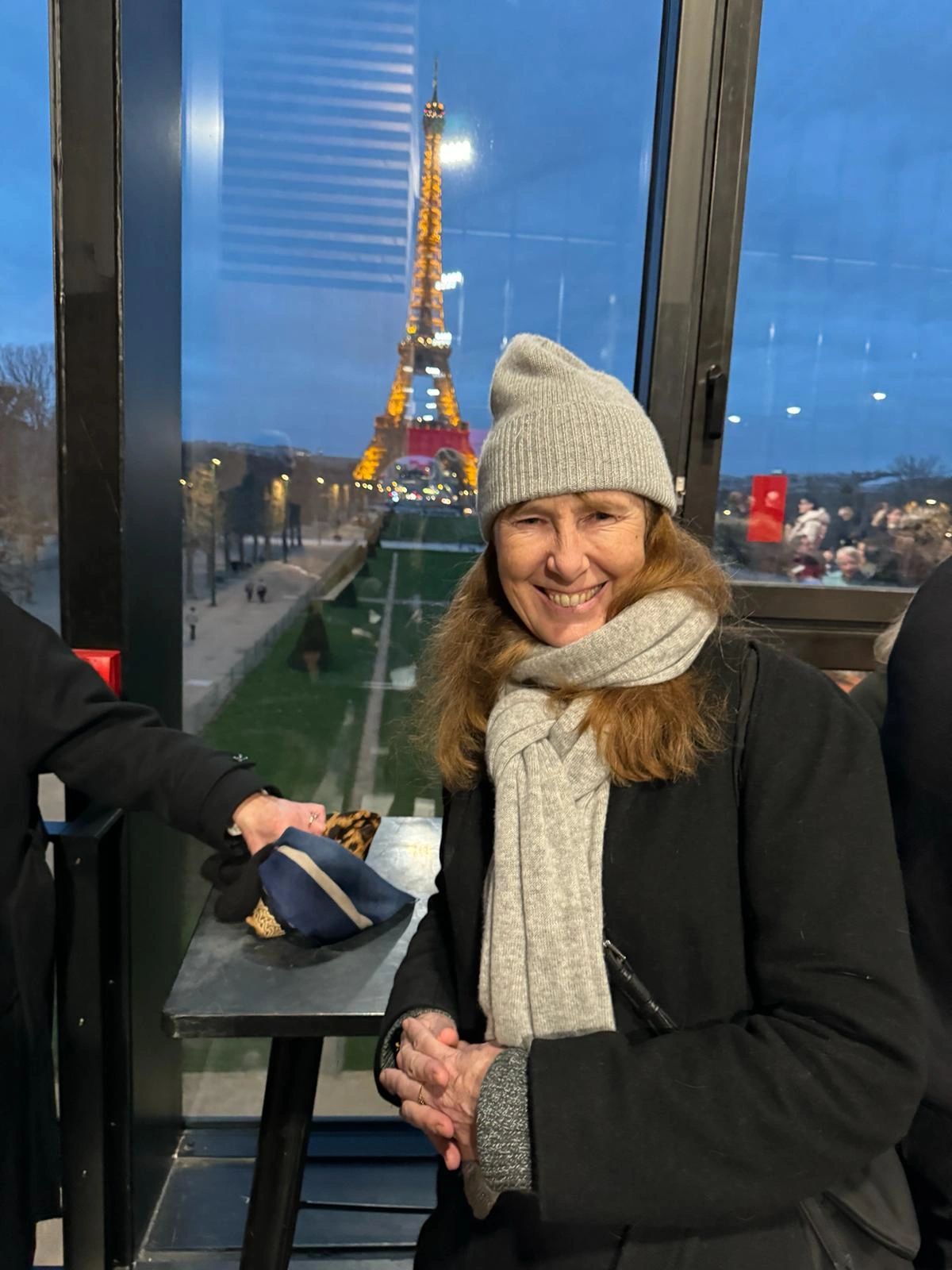
Visual artist Virginie Balabaud resides in Paris and has been exhibiting her works since 1999. Following her video "Globuline’s Game”, she is also known by the name Globuline. While her work often straddles the realms of documentary and video art, her preferred medium remains photography, which she incorporates into all her films. With degrees in clinical psychology and psychoanalytic research, her artistic endeavors delve into themes such as gestation, encounters, and intimacy. However, the overarching theme of her work centers around memory, specifically exploring the relationship between humans and their objects in the preservation of said memory. Her approach leads one to consider Art as the sole vehicle for possible transmission in problematic situations concerning object conservation. Since 2015, she has been exhibiting her vector drawings, including the series "Why do you lie?" Her journey is punctuated by numerous performances, exhibitions, and installations.
What's the absolutely necessary ingredient to be a good director?
The absolutely necessary ingredient to be a good director is: the feeling of freedom, the power of persuasion, perseverance, organization, and finding good partners.
First and last cinematographic crush?
The first crush I had is the film "Crash" by David Cronenberg.
The last crush I had is « Dark Waters » by Todd Haynes
How old you were when you decided you wanted to be an director?
I was 30 years old and I was writing a doctoral thesis in psychopathology and psychoanalysis. I watched David Cronenberg's film "Crash." I was mesmerized by the way his film facilitated and enriched the understanding of a complex subject. While a doctoral thesis in the humanities could address the same topic, few people read doctoral theses; it's elitist. However, his film is understandable to everyone; he skillfully handles difficult psychoanalytic concepts. Through his direction, Cronenberg tackles Eros and Thanatos in a vivid manner with a compelling screenplay. Having the choice between science and art, the film seemed to me a more accessible means of understanding, one that popularizes scientific ideas and reaches a broader audience. Therefore, I abandoned my ongoing thesis on the theme of "addictions after a traumatic brain injury" and truly began working on visually representing my thoughts through my first documentaries.
For you a Film is…
A film is a powerful means of conveying our ideas visually and audibly, with emotional impact being just as solicited as intellectual engagement. Building a film is to appropriate the world, taking in everything that has been done and accomplished by others and bringing a fresh perspective.
Watching a film is to enter the artistic world of an artist, an immersive experience.
What do you feel when you're directing/writing?
When I direct a film, it's about urgency; in the context of documentary filmmaking, it's a way to adapt to reality, to engage with an intimate, personal vision. When I write, time loses its importance. I write the voiceovers for documentaries after capturing the images. For fiction scripts, I'm in an imaginary world where the outside has no impact; I cut off all means of communication to be in my own bubble, where I develop the characters.
You can go to the Movies with an actor/director/screenplayer that you love. What kind of movie do you choose and with who you're gonna watch it?
I would go with Nanni Moretti to see his film "The Son's Room." I want to discuss it directly with him because it addresses themes of disappearance, absence, and what remains of the other through objects.
Audrey Hepburn used to say “Nothing is Impossible”, what do you think about it?
Nothing is impossible in imagination, but there are always material and ethical limits.
Can you live just of your passion?
I produce the films I direct myself, and they are currently intended for festivals.
What's more important talent or luck?
Having no luck doesn't help talent!
You must go to a desert island but you can bring with you just one movie…
I would bring "The Godfather" by Francis Ford Coppola with me because cinematically, it's a masterpiece at every level: every shot is significant, the editing is very effective, the colors and lighting are beautiful, the performances of the actors are exceptional, the storyline always keeps you on edge, and you can understand the Sicilian immigration in the city of New York, which city I love.
Have you ever accepted a part/ a movie to direct/ a script to write even if you didn't like the project?
No, since it's not my main source of income, art is there to elevate me.
What's the best compliment you have received about your Job?
The best compliment I've ever received is that the analysis of the situations I explore is never judgmental. Indeed, my approach to subjects is more phenomenological in nature.
Are you satisfied about your career?
As I work as a psychologist in addition to being a filmmaker, I don't have the time or the budget needed to carry out all the projects I would like to. Nevertheless, I am happy to have completed the artistic works and to showcase them. Frustration remains a driving force for me.
Do you have a good luck charm?
A four Leaf Clover.
Which is the worst moment on set ?
When there's no more good light for lighting.
How do you feel when a job you've been part of it's ending?
Feeling down, and I fight against it by starting new projects before finishing the one I'm currently working on.
Have you ever lied to get a part/job?
No
If you should win an Oscar your first taught would go to…
In cinema itself, which has allowed us to express ourselves through this medium.