
REVIEW
•Umbra (pen-, ant-)
Directed by Vaggelis Deligiorgis
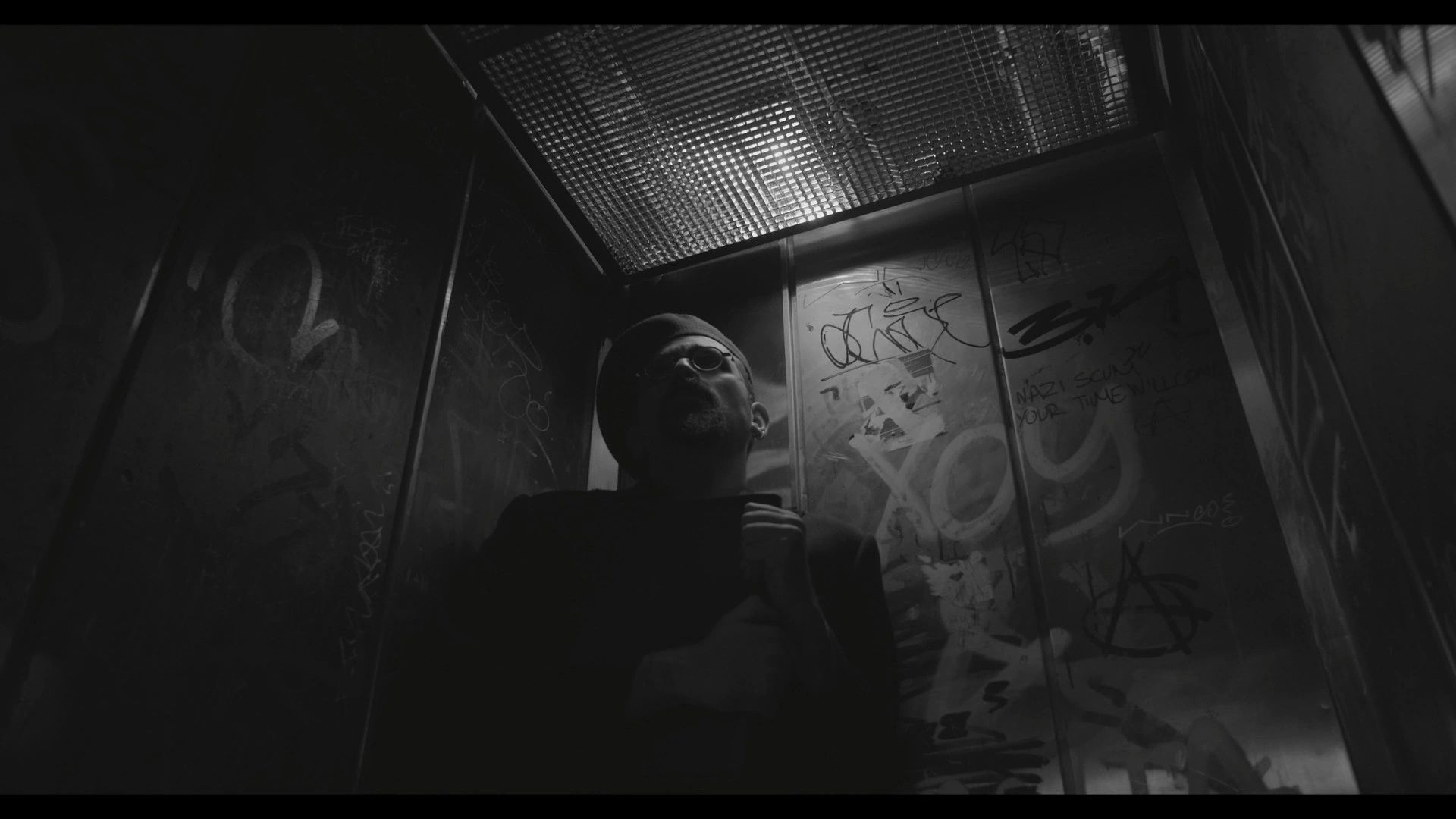
There is so much in UMBRA, this great little experimental film.
Despite the short duration (only 7 minutes), the narrative structure is crisp and technically perfect. Every act is clear and has a personality worthy of a feature film, a very difficult goal to achieve in a short film but when this happens does a good part of the work and marks the success of it. And this is the case.
The short movie shows a man walking through a long narrow corridor, at first illuminated, then dark (the title UMBRA is wisely and beautifully chosen). The director's statement reveals that this man is a sort of journalist but his appearance and attitude also recall a priest or more generally a confessor. The claustrophobic passages that the man walks through recall a labyrinth. They are full of graffiti that the protagonist ignores while walking, perhaps too busy going forward, perhaps too busy getting to the "final goal". Graffiti and phrases fill both the external and internal walls (the phrase “take a trip to Philadelphia” is highlighted) and they are so strong that they voluntarily obscure the protagonist.
The elevator that leads to the upper floor trembles and frightens, symbolizing the compromise that every journey (especially metaphorical) includes in its essence. Finally, the protagonist reaches his goal. Or perhaps, more than an arrival it is a departure.
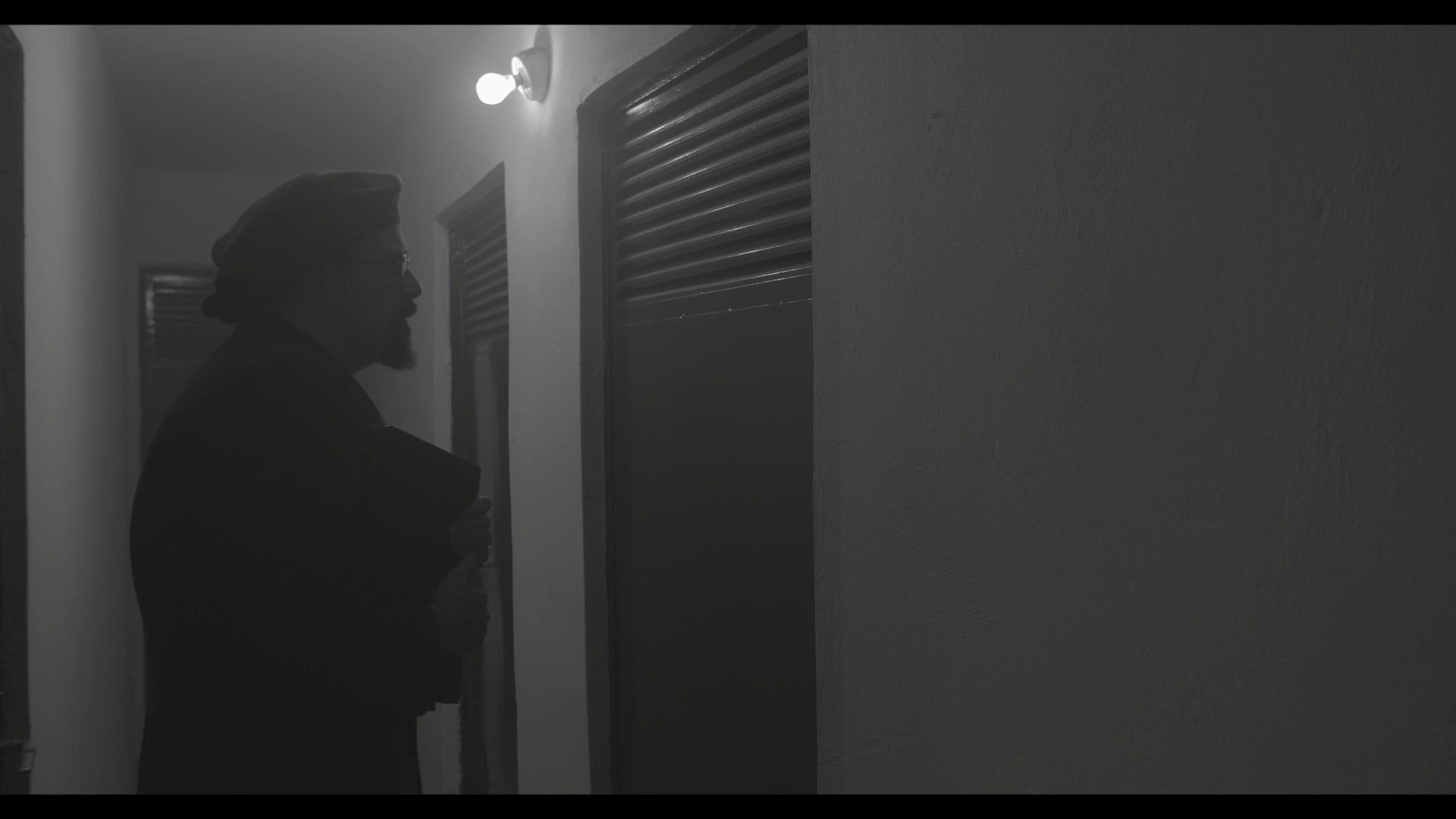
The room where he arrives seems at first a regular small room but only after a few moments, we find out it's separated by bars, which divides interviewer from the interviewee, confessor from the reticent sinner (the technique used on this occasion is beautiful).
And it is then, after an active invasion of light, that the roles are exchanged, slowly, more and more, until they merge and mirror each other until the two people are transformed into a single being and a single essence.
There are no dialogues, and they are not needed. Photography, writing, interpretation, and direction are enough to make us appreciate this work.
The actor that plays both roles is a great Konstantinos Koutroumpis that also signed the soundtrack. Cello, flute, and percussion fill the scene with discretion.
Congratulations to Vaggelis Deligiorgis for having written, directed and produced this film (he also performed the percussions) full of meanings and contemporary themes which, depending on the subjective interpretation, can tell both an aspect of society and an intimate experience.