
INTERVIEW
Kristina Schippling- INTERVIEW
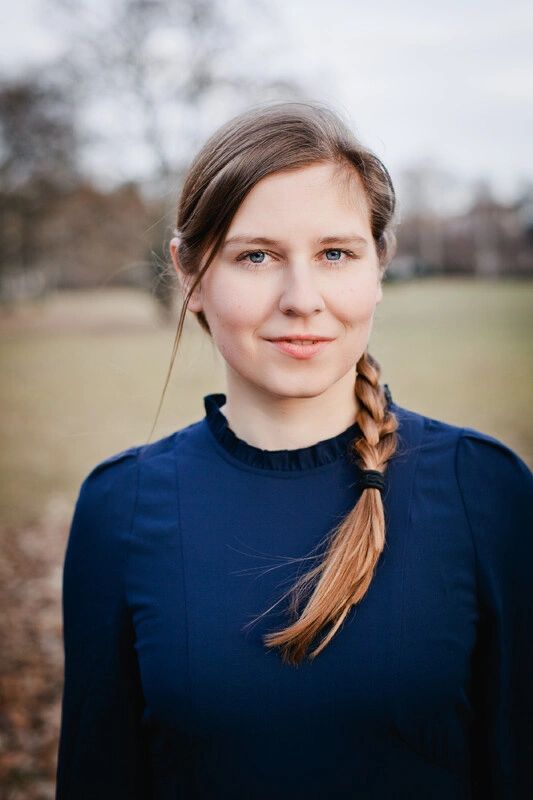
Kristina Schippling already boasts an impressive oeuvre. Not only is she an active film director, a cinematographer, a screenwriter and editor, she has also published several books within philosophy and literature. Her subjects are diverse. Such a vare curriculum vitae is rarely seen.
How did this curriculum vitae and the diversity in your activities come about, Kristina?
A career usually doesn't follow a straight line. After a project, you don't immediately find a follow-up project. During the gaps I often tried something new. Especially in film, I didn't have enough money at the beginning as a student to pay for an entire team. For these reasons, I did a lot myself. Otherwise, many of the short films would not have been made.
It seems that you always choose new subjects. Is there a connection within your projects?
I think so. There always are themes that concern me personally. Basically, human relationships are a theme in many of my projects. The theme of the success and failure of bonds comes up again and again.
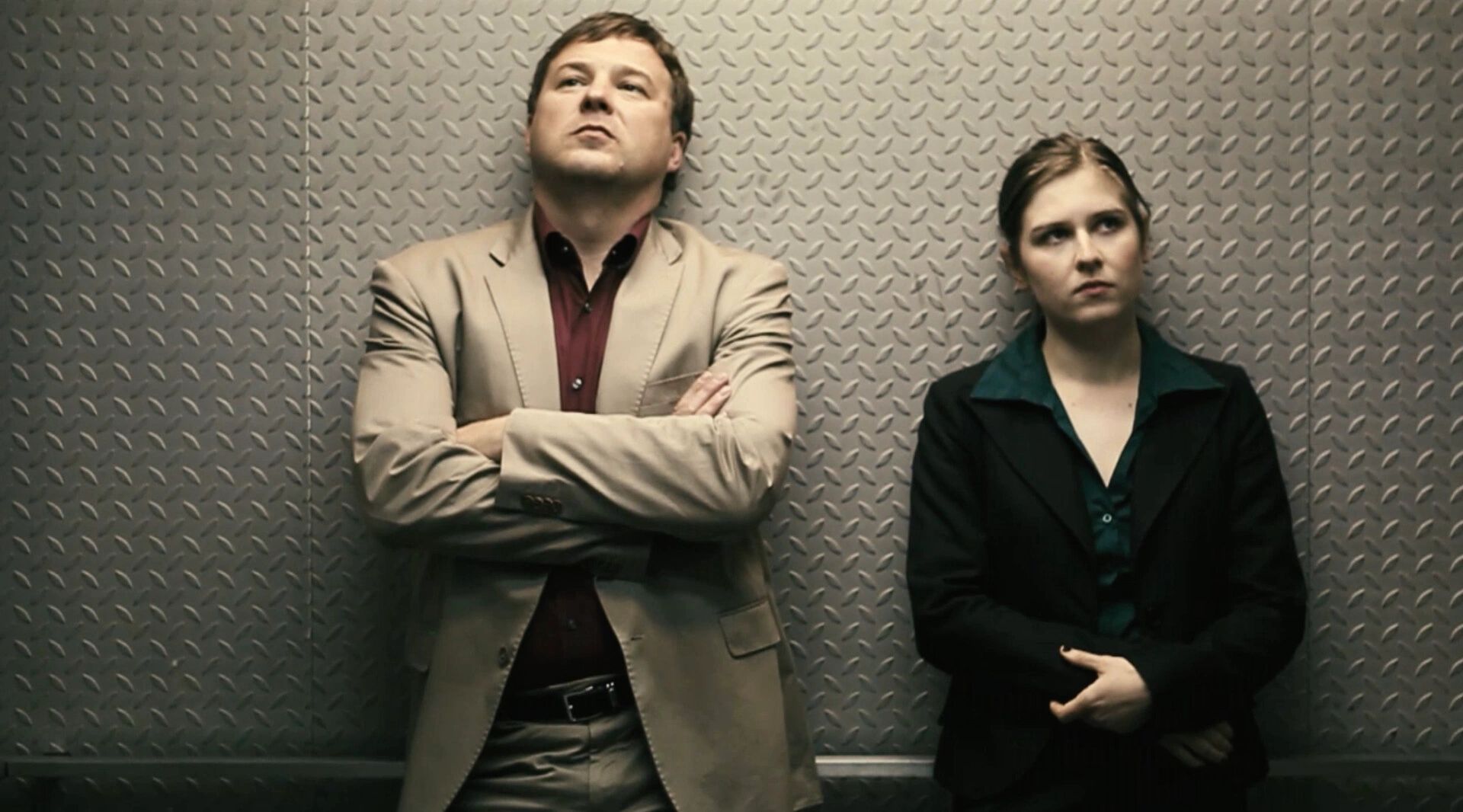
In your short film "Fear, that the rats rise up", would you describe the relationship as a success or a failure?
"Fear, that the rats rise up" is about a love relationship that fails. There is a lack of trust. Communication fails. The lift, which looks like a prison cell, points to unhealthy control mechanisms within the relationship. The protagonists lock each other up for fear of losing the other. They talk past each other, can't open up, talk in riddles until they don't talk at all. There are small approaches, but it doesn't really get going. Still, neither is ready to leave when the door opens, and so they go further and further downhill in their dysfunctional relationship.
What distinguishes the dysfunctional relationship in "Fear, that the rats rise up" from the relationship in "Cold Thoughts"?
Here, the relationship is actually already in the past. In "Cold Thoughts" a couple is about to break up. They are standing on the corner of a house outside, looking in different directions. They are still connected by what they have experienced together. They can't let go. Yet it is already over. So, they circle around their shared memories.
And "Findings", how would you describe the relationship here? Obviously, there is no love relationship in the film.
In "Findings", the relationship to oneself is in the foreground. Identity is very much related to one's origins. But it also has to do with the fact that the identity adopted at home is no longer felt to be suitable at some point and that one's own identity has to be worked out first. Working out one's own identity does not always have to be successful. The search for one's own identity and growing out of old patterns, the relationship to oneself are the themes in "Findings".
That sounds thematically very similar to the music video "Breathe on"?
Yes, it is. However, growing up and childhood are not in the foreground here. Rather, something dies in the main character, which can be an old attachment that no longer works. She is in the cemetery; something is holding her there. She simply cannot leave. When she tries to leave, she is always thrown back to a certain place. Eventually she does manage to let go and leave, but only by leaving a part of herself behind. She puts on make-up, puts on sunglasses, disappears behind a social mask. She's gone, but something true, authentic is still left there in the cemetery.
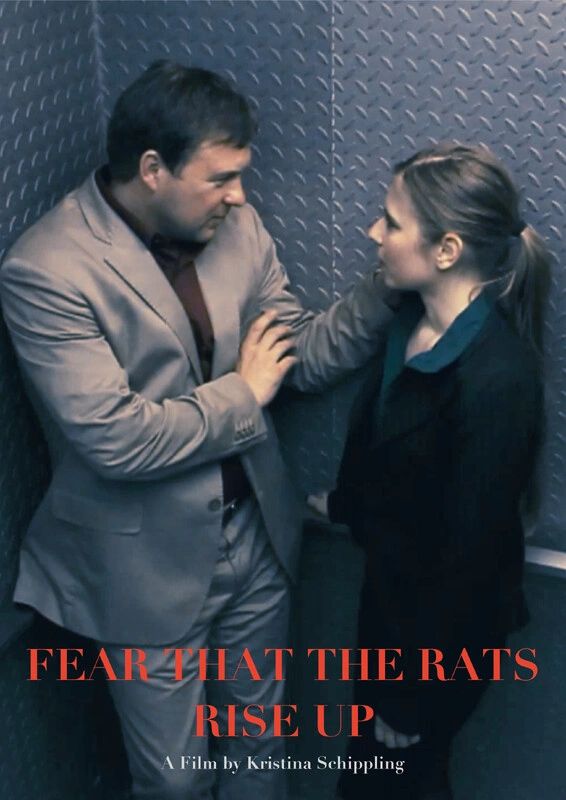
t's very fascinating how you describe your films from the perspective of human relationships. Can you also talk about your feature-length films? "The Sound of Cologne" and "Unequal"? Do these also have to do with human relationships?
"The Sound of Cologne" is a documentary about the electronic music scene in Cologne from Stockhausen to today. At first glance, this film doesn't seem to have that much to do with interpersonal bonds. Nevertheless, it was important to me to describe the influences of the musicians on each other, especially the influence of Stockhausen and Can on the following composers. Even if artists want to distance themselves from these beginnings of electronic music, they still relate to it and are influenced by it. It was important for me to show the network between the artists and to work through the influences of the city of Cologne to the music within. Unequal" is a film about a girl with a psychological disorder. She has a multiple personality disorder. The four people living inside her eventually realise that they are not real. We asked ourselves the question what would happen to a person when they realise they are not real? Again, it's about interpersonal relationships. These non-real characters eventually meet their real doppelganger. It's basically about bonds that break due to psychological disorders.
And last but not least: Your first short film "This is my Body" is centered around a love triangle. Again, it is clearly a relationship drama. But why doesn't the newly found couple simply break away from the old drama?
That's a good question. I think the man is unable to separate from the woman for the new woman. And so, everyone suffers. The suffering is also reflected in the eroticism of the new couple. It is influenced by the inner suffering of the former partner. This woman appears between the two again and again, disrupting the new happiness. The man wants to keep both women, the women are focused on each other. It's basically a classic.
Thank you for the exciting interview. I hope you will do many more projects. These films have impressed us very much, especially in their metaphors and profundity.