INTERVIEW
Goran Ajtič - Interview
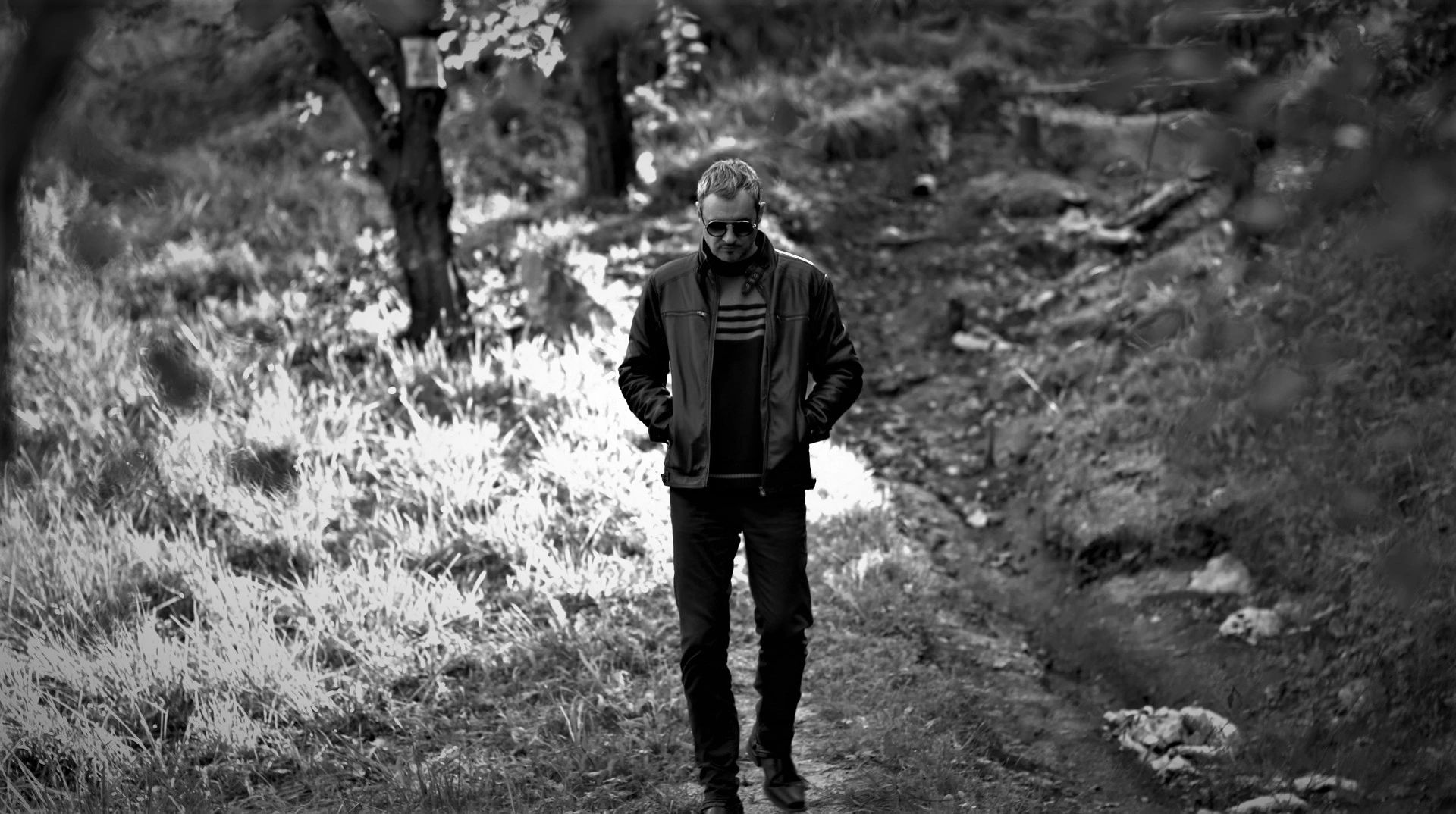
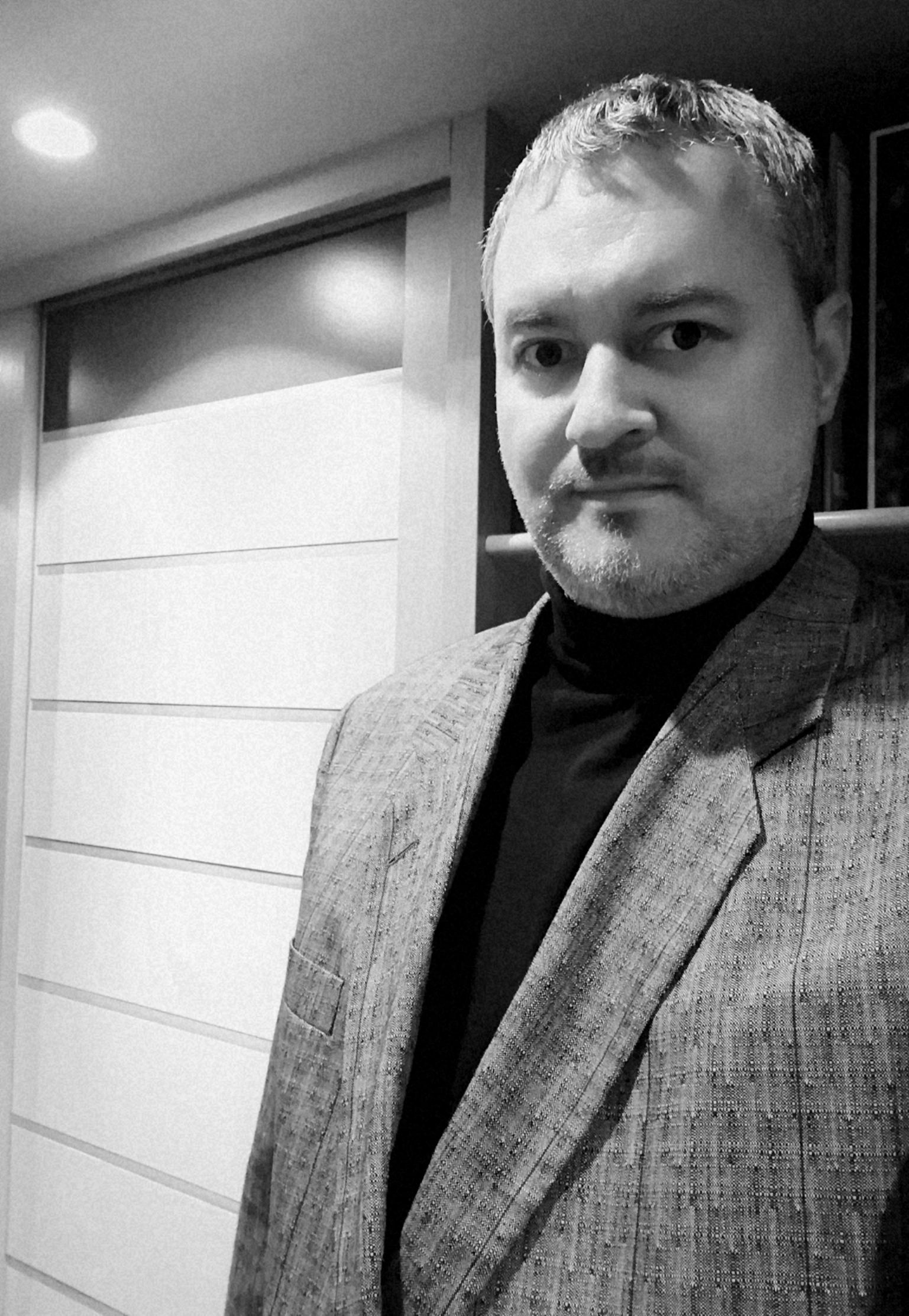
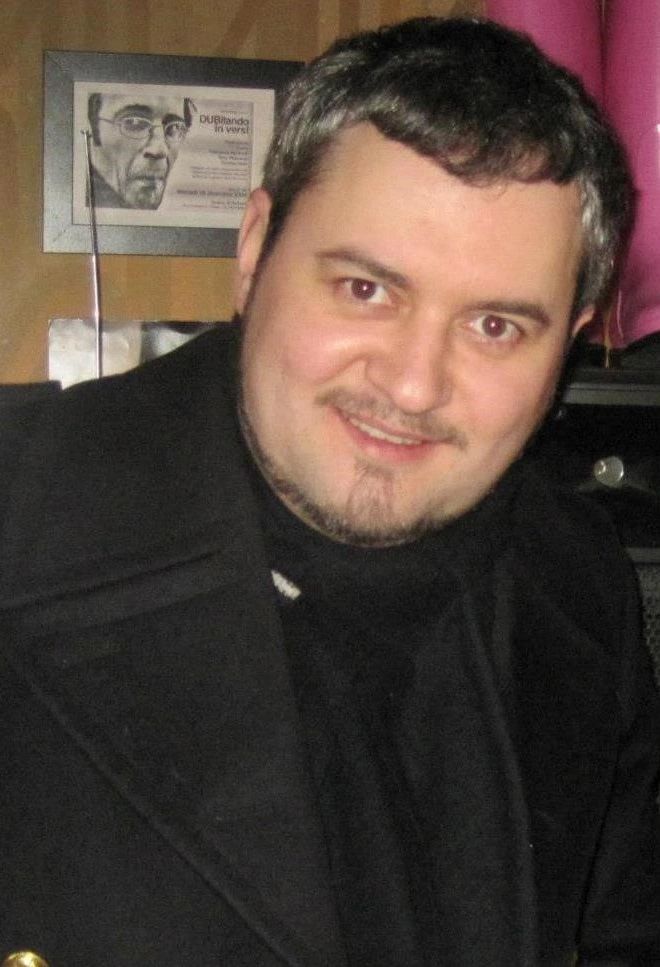
Goran Ajtič was born in Slovenia. Already as a young boy he was very interested in European and world cinema, but surprisingly, he started studying tourism. As a tourist guide he used to travel a lot around Europe, buliding his enthusiasm for different cultures. In 2005 he made his first short art film, titled "From Romantic to Realism", assisted simply by his friends; encouraged by it, he later made longer film, gothic art "Face of Evil". Today he could be described as an indie film director as well as an art house filmmaker. The main subjects of his films are taboo themes, such as paranormal and mysteries, crime and secret societies, sometimes also violence and eroticism. Many films are made totally without dialogues, accompanied only by strong images and film music. In last year, at festivals around Europe and US, he won several awards for two of his short films: a thriller "The Conspiracy" and experimental art video "Art & Joy & Pleasure".
Do you prefer Comedy or Drama?
Actually, I like both; but if I really had to choose one, I would choose drama, because drama offers much more than comedy itself; comedy is always funny and entertaining (although sometimes there is a lot of depth there as well), while drama is a great variety of different themes and emotions: it could be merry, sad, bizarre, violent … We can have tears as well as happiness, story itself has a great range of spheres. There are no boundaries in drama.
Life imitates Art or Art imitates Life?
Life is art in a way. Everything we put in art (cinema or literature) are actually pieces from our own lifes, a reminiscence of something that we already saw or experienced. But then again, on the other hand, in the case of cinema there is always a big difference between an art film and realistic one; experienced viewer can immediately separate realism from art. But yes: there is no real life without art as well as there is no art without life itself. Everything is strongly connected.
Which is the best Moment on set?
In my eyes, without exceptions, there is always a moment when I make my very first shot for a new project. Even if this shot is really a short one and is later never edited into a film itself. It offers me great joy, because it is a true trigger to start shooting a new film. This is a unique feeling.
Did anyone ever tell you weren't good enough?
Well, during last years of filmmaking (I am into it since 2005), there surely were some people who didn't like this or that, or what I did in general. But I think every film director faces this kind of stuff, especially in the beginning of his or her film career. So, yes: maybe someone told me that I wasn't good enough, but it had to be long ago … Still, I always knew that one day I will be good and innovative in making films, which means that I have already forgotten this kind of remark.
How can you stay focused on your goal?
It was never a problem for me. If there is a great idea for the script (which I usually get pretty quick, every half a year a new one – that is a curse), than it is the idea itself that gets me motivated, every day and every week, more and more; so staying focused on my goal is really simple.
Have you ever had a breakdown because of your Job?
Yes, many times. Countless times, actually … But it was always because of a job that had nothing to do with film. You see, several decades ago, before I turned all my wishes and plans into the world of film, I used to work in many different categories – as a hotel receptionist, as a tourist guide, as a night watch, for some time even at hospital; there were many ups and downs. But as a filmmaker, making my own films according to my own ideas and scripts – no, I never had a breakdown, luckily. At least not yet.
Talent is a blessing or a curse?
I can only speak for myself. In my case, I would say it is one and the other: I have many ideas for screenplays, which means that I know I will never be able to direct all the projects that I imagined. Many of this projects will remain only on a paper, as scripts … Beacuse you have to be very lucky to get a producer to direct a full feature film; so, you can have your talent and ideas, but to get a support from a true producer or studio is also a lot of luck, and that is a fact. You see, all my projects so far – including »The Conspiracy« and »Art & Joy & Pleasue« – I produced completely myself, which means that I had to use my own budget, from my own pocket. So, if I add other ideas for the future projects, where even greater budget will be needed … Yes, my talent is definitely a blessing and a curse.
What would you like to improve about yourself as an actor/director/screenplayer?
Yes, sure I would like to improve something. First of all, every new project that I make should be different from one before. Secondly, I would like to improve my skills as a writer; I am a writer of novels and short stories, but considering film scripts – which have a different approach than novels in the world of literature – there is still much more to be done.
What's the worst critic you have received?
Actually, it was a pretty bizarre one. Not considering the film itself, nor the story or acting, but simply the requisites and settings. Once after the premiere of an art film, called »Face of Evil« (in 2011), one of the viewers was bothered by the style of a castle, made partly of stones and partly of bricks – it was apparently too much for this person. Funny, really. Still, I have a nice memory today and it still makes me laugh when I think about it. There have also been other critics during last years, but in my eyes, nothing of great importance. Many of these critics were targeting themes I usually use in my films; some people are constantly »nagging« about violence and graphic images of sex, but I guess this is quite normal for many casual or conservative viewers who are not used to this kind of films.
If you weren't an actor/director/screenplayer what would you like to be?
Definitely a painter or photographer. You see, I used to draw a lot as a child, because the world of images was always very important to me. Once an artist, always an artist … I was travelling with my parents (my father was an architect), made many visits to Austria and Italy – especially Tuscany, Venice and Rome – where I gained my love for observing the rich world of architecture. Unfortunately, the drawing talent was lost when I was about 15 years old, maybe also because I simply stopped drawing – I stopped working on myself in this category. The style was very suitable for comic books (even if I was originally influenced by renaissance painters like Paolo Uccello, Sandro Botticelli and Pieter Brueghel), but alas, I never achieved a talent for a true painter – maybe another reason to stop doing that … Well, on the other hand, even today, I am still very much into photography, and I hope I will improve it even more. Most of all I like black and white photography.
If Cinema was a color what would it be?
Don't ask me why, but in my opinion it should be either green or red. Both colours are very strong with unique effect, and they reflect powerful emotions. Indeed, I already made some art films using some special lenses, and I used exactly these two colours. I am really attached to them (red & green), and I still can't explain why exactly.
A day without a movie is...
… severely lost, like a day without food or water. Still, it doesn't mean I watch a movie every single day. But yes, when I have time to watch it I gladly do, usually several movies per week, every day when time allows me to do it, of course.
If someone offered you to play/direct/write in/a movie that you despice but that for sure will make you rich and famous...would you accept the job?
A tricky question, actually, and that is why I like it. Hm … You see, in the world of cinema it is hard to get a special reputation, to be noted because of a certain style or genre that you make or prefer. Usually, for a film director as an auteur, it takes years to come to that specific point of recognition. And then, suddenly, this very person who is noted because of his different style, directs a film that has nothing to do with his vision – this person utterly destroys his image and losts its fans or followers. In exchange for a lot of money and fame? No. I think (not know for sure) I could not do it. Honestly.
What's your greatest ambition?
To direct several – at least four ar five – full feature films, all of them by my own ideas, imagination and scripts. Hard goal, I know. But yes, this is certainly my greatest ambition.
What's your biggest fear?
Never to achieve my goals in cinema, which means never to get a chance to direct at least one feature film by my own script. That would be a real loss and tragedy for me.
Does music helps you to play/direct, write?
But of course! Music is the main key to all my ideas, to my world of fantasy and drama. So, not just that music helps me to direct, it also produces an idea for a script. You see, in my process of filmmaking, there is always music, in the very first place. When I hear a symphony or a song by a rock or pop band (I posses also many CDs at my home, as an enthusiastic collector), it helps me to get or to improve the idea for the film itself. I hear the music and I see the final images of my film! In many cases these same melodies are used in the project, or I ask the composer to make something really colourful or atmospheric … When I was a child, I used to watch many films with excellent film score, especially with music by John Barry, Ennio Morricone, Angelo Badalamenti, Basil Poledouris or Vangelis. These are still my favourites today. I also like to hear music by Beethoven, Wagner or Händel used in a certain film (Stanley Kubrick, John Boorman or Lars von Trier, they all used classical music in many projects).
You have the chance to make a Silent movie, what's your message to the audience?
Now this is a really unique question, especially in my case, considering the fact that the majority of my films – or shall I say art/experimental videos – is made totally without words, only accompanied by music. So, in a way, I have already made silent movies. A message to the audience is simple, really: a film without words, only with images and music, is sometimes even stronger than the one with words, because the images and sounds make much stronger atmosphere and sometimes they can also tell even greater story; it also cements something different and notable to stand out, especially in a modern world, where film audience is usually used to dialogues.
Share your speech if you should win an Oscar.....
For me it is hard to imagine to win an Oscar, because art films and films made by »auteurs«, not aiming at ordinary audience, usually don't win many Oscars, if any at all. Still, if this day ever comes, I will probably have to »invent« my speech on the spot. So I can't tell you today how my Oscar speech would look like; it would probably be made by an inspiration of the moment itself.